
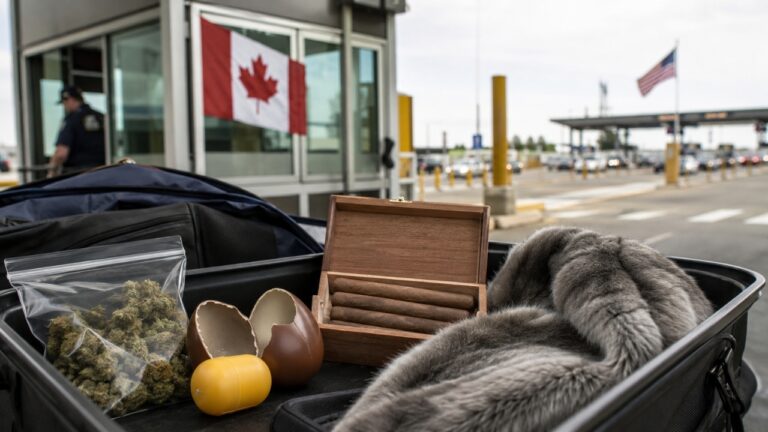
Canada and the United States share the world’s longest international border, yet crossing it can instantly change the legal status of an ordinary purchase, a piece of candy, or something sitting in your carry-on bag.
Some of the clearest differences come from federal law. Canada has nationwide frameworks for recreational cannabis and medical assistance in dying, while American federal rules take a different approach. Other gaps come from sanctions, food regulations, minimum ages, medicine, and wildlife protections.
Legal permission still carries conditions. Age requirements, quantity limits, medical eligibility, customs rules, and provincial regulations can apply. Even with those qualifications, several Canada-U.S. differences remain surprisingly large in 2026.
1. Buy and Carry Recreational Cannabis Under Federal Law

Adults of legal age in Canada can purchase cannabis from authorized retailers and possess up to 30 grams of legal dried cannabis, or its equivalent, in public. Provincial and territorial age requirements differ, including a minimum age of 21 in Quebec.
The national framework is explained in Health Canada’s cannabis rules. Recreational cannabis became legal across Canada on October 17, 2018.
American states have created their own legal cannabis markets, including large ones in California and New York. Federal law remains different. The DEA drug scheduling page continues to classify marijuana as a Schedule I controlled substance.
2. Mail Recreational Cannabis to Another Adult
Putting marijuana in the mail sounds like an obvious way to attract law-enforcement attention. In Canada, adults can legally send cannabis to other adults of legal age when all applicable requirements are followed.
The Canada Post cannabis guide even gives practical instructions. Cannabis must travel domestically, and packaging needs to prevent odour, leakage, tampering, and identification of the contents.
American postal rules follow federal drug law. Under USPS controlled-substance rules, mailing a controlled substance is unlawful when its distribution violates the Controlled Substances Act. Ordinary consumers therefore cannot legally send marijuana through the U.S. mail.
3. Take Recreational Cannabis on a Domestic Flight
A passenger traveling from Toronto to Vancouver can carry legal recreational cannabis in checked or carry-on baggage, provided possession and destination rules are followed.
Canada’s air-security agency lists cannabis as permitted for domestic travel in its CATSA cannabis guidance. International travel is treated separately. Carrying cannabis across Canada’s international border remains illegal without specific authorization.
American airport rules reflect federal prohibition. According to TSA cannabis guidance, marijuana remains illegal under federal law apart from narrow exceptions involving qualifying hemp products and FDA-approved medicines. TSA focuses on aviation security, although suspected violations discovered during screening can be referred to law enforcement.
4. Buy the Original Kinder Surprise Egg

Few international legal differences are as innocent-looking as a chocolate egg.
The classic Kinder Surprise contains chocolate surrounding a plastic capsule with a toy inside. Ferrero openly sells the familiar format through its Kinder Canada product range.
American food regulations treat the design differently. The FDA import alert specifically identifies Kinder Surprise Eggs among confectionery products containing embedded non-nutritive objects that may create a choking hazard.
Kinder Joy is sold in the United States with the toy separated from the edible portion. The traditional toy-inside-the-chocolate version cannot be legally imported for ordinary U.S. retail sale.
5. Buy Alcohol at Age 19
View this post on Instagram
A 19-year-old can legally purchase alcohol anywhere in Canada. Alberta, Manitoba, and Quebec use 18 as the minimum legal drinking age, while the other provinces and territories use 19, according to Canadian public-health guidance.
Similar age-based variation appears in other regulated activities, including online casino gaming, where platforms such as PowerPlay operate within rules that can differ by province.
The American minimum purchase age is higher everywhere. The NHTSA drinking-age guidance states that alcohol purchases require a minimum age of 21 in all 50 states and the District of Columbia.
Federal highway-funding rules helped produce the nationwide American standard during the 1980s. For a 19-year-old traveler, crossing the border can therefore determine whether ordering a beer at a licensed bar is legal.
6. Bring Cuban Cigars Home From Vacation
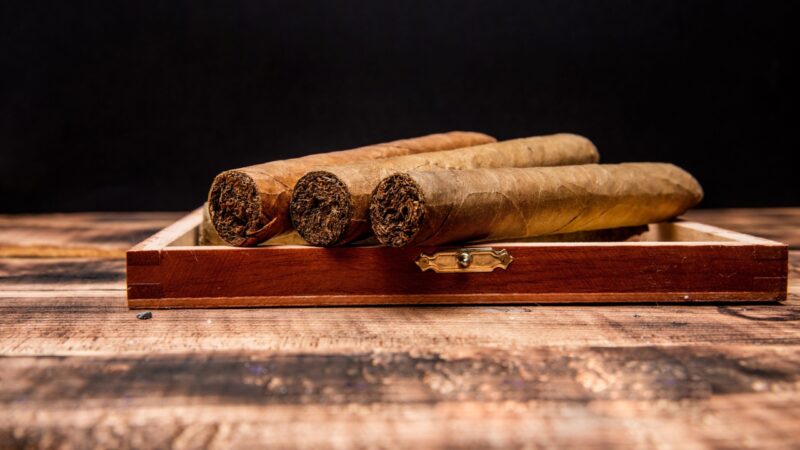
Canadians returning from abroad can bring cigars into Canada when they comply with declaration, age, quantity, duty, and tax requirements. After an absence of at least 48 hours, the Canadian personal exemption guide allows up to 50 cigars within the applicable exemption.
Cuban cigars create a very different problem for someone returning to the United States.
The U.S. Treasury Department’s OFAC Cuba rules state that Cuban-origin cigars and alcohol cannot be imported into the United States by travelers. The restriction has applied since September 24, 2020.
A properly declared box of authentic Cuban cigars can therefore make it home to Canada. The same souvenir cannot legally enter the U.S. in a traveler’s baggage.
7. Join the Canadian Armed Forces at 16 in Certain Paths
Military eligibility produces another unusual age difference.
The Canadian Reserve Force rules say applicants may qualify for Reserve Force service from age 16, provided they satisfy education and other eligibility requirements. Applicants under 18 also need parental or guardian consent.
American federal law sets the minimum age for original regular enlistment at 17. The requirement appears in the U.S. enlistment statute, which also requires written parental or guardian consent for applicants younger than 18.
Specific Canadian occupations and entry programs have additional requirements, so being 16 does not automatically open every military career. A legal entry route nevertheless exists earlier than under U.S. enlistment law.
8. Receive Clinician-Administered Medical Assistance in Dying

Eligible adults in Canada can receive clinician-administered medical assistance in dying, commonly called MAID, after satisfying federal eligibility requirements and procedural safeguards.
The Health Canada MAID overview describes two permitted methods. One allows a physician or nurse practitioner to directly administer medication that causes death. Eligibility involves requirements concerning age, decision-making capacity, medical condition, voluntariness, and informed consent.
Several American jurisdictions permit medical aid in dying involving medication that the eligible patient administers personally. Clinician-administered euthanasia remains illegal throughout the United States, according to the Cornell euthanasia overview.
Visitors to Canada generally are not eligible for MAID.
9. Receive Prescription Pharmaceutical Heroin for Severe Opioid Use Disorder
Canada allows diacetylmorphine, pharmaceutical heroin, as a supervised treatment option in selected cases of severe opioid use disorder.
According to Health Canada treatment guidance, injectable opioid agonist treatment may be considered for people who have received insufficient benefit from treatments such as buprenorphine or methadone. Treatment generally involves closely supervised administration in a clinic or pharmacy, and availability differs by province and territory.
American federal law gives heroin Schedule I status. DEA guidance describes Schedule I substances as having no currently accepted medical use under federal law.
An American physician therefore cannot prescribe pharmaceutical heroin as an approved treatment in the same manner available through certain Canadian programs.
Drug laws also form part of the broader picture of crime rates in Canada, where drug-related offenses remain a separate category in national crime data.
10. Bring Home a Newly Purchased Canadian Sealskin Product

Canada maintains a regulated seal harvest, and legal products include seal meat, oil, fur, clothing, and souvenirs. Canada’s seal-product guidance discusses both the domestic market and rules affecting travelers.
A visitor planning to take a newly purchased sealskin item south of the border faces a major restriction. Canada’s guidance specifically warns that the United States prohibits imports of marine mammals and products made from them under the Marine Mammal Protection Act.
The underlying U.S. marine mammal law establishes a broad moratorium on marine-mammal imports, with limited statutory exceptions.
Under the Marine Mammal Protection Act import provisions, NOAA Fisheries issued full comparability findings for 89 nations and partial comparability findings for 34 nations. We denied comparability findings for 12 nations. https://t.co/X1Zyn5wHc0 pic.twitter.com/4EskzCaPDp
— NOAA Fisheries (@NOAAFisheries) August 29, 2025
A sealskin product may therefore be entirely legal to purchase in Canada and prohibited when the owner attempts to bring it into the United States.
A Border Can Change the Rules Quickly
Canada and the United States frequently reach different legal answers to the same activity. Cannabis creates several especially visible examples because Canada regulates recreational use nationally while American federal prohibition remains in place.
Candy design, Cuban sanctions, military recruitment, medical practice, and wildlife law produce equally memorable differences.
Border rules deserve particular attention. Legal possession inside Canada does not automatically mean an item can leave the country or enter the United States.
Legal problems at the border can extend beyond restricted goods, since a past conviction may also affect immigration status in Canada and the U.S.
Anyone traveling with regulated goods should check current Canadian and American government guidance shortly before departure. Laws, sanctions, product rules, and enforcement policies can change, and a perfectly legal Canadian purchase can become prohibited as soon as it reaches the border.