
What matters is where you guide, what kind of tours you run, whether you work on public land or in protected sites, and whether a city, park, or province has its own permit or business-licensing rules.
In other words, many people can legally work as tour guides in Canada without a general licence, but some roles absolutely do require a permit, local authorization, or a separate regulated licence tied to the place or activity.
Canada’s tourism economy is large enough that this matters. Statistics Canada reported that tourism GDP accounted for 1.70% of nominal GDP in the third quarter of 2025, and tourism jobs reached 707,400 in the first quarter of 2025.
The Tourism Data Collective also reports that tourism generated $129.7 billion in revenues in 2024 and contributed $50.8 billion to GDP. That means tour guiding is not some tiny informal side niche. It sits inside a major national industry, which is exactly why local compliance rules can matter even when there is no single national guide licence.
The Short Answer By Scenario
| Situation | Do You Usually Need a Licence? | What Actually Matters |
| General city walking tours in many parts of Canada | Not always | Check city rules, public-space permits, and business registration |
| Guiding in a national park or Parks Canada site | Often yes | A Parks Canada business licence may be required |
| Guiding in Montréal public space in Ville-Marie | Yes | Tourist guide permit required |
| Guiding in Québec City | Yes | Tourist guide permit required |
| Guiding in Niagara Parks | Yes | Niagara Parks tour guide licence |
| Hunting or certain outfitter guiding in British Columbia | Yes | Guide outfitter licence under provincial rules |
| Selling travel packages rather than guiding | Different licence regime | Travel seller/travel agency rules may apply in some provinces |
There Is No Single Canada-Wide Tour Guide Licence

This is the first thing to understand clearly. Canada does not run one national “tour guide card” that every guide must hold before working. Instead, rules are fragmented. Some of them come from municipalities. Some come from park authorities.
Some come from provincial tourism or wildlife systems. Some tours need no special guide licence at all, but still require normal business compliance such as tax registration, insurance, contracts, vehicle compliance, or permission to operate on a specific site.
That is why two guides doing what looks like the same job can face completely different legal requirements. A person giving private architecture walks in one city may only need to comply with ordinary business rules.
Where You Do Need A Permit Or Licence
The cleanest examples are local and site-specific.
Parks Canada states that tour operators or guides in Parks Canada places may require a valid business licence for each national park or national historic site where they operate.
That means if your tours run in federally administered protected places, you cannot assume that ordinary tour-guide status is enough. The land itself triggers the licensing issue.
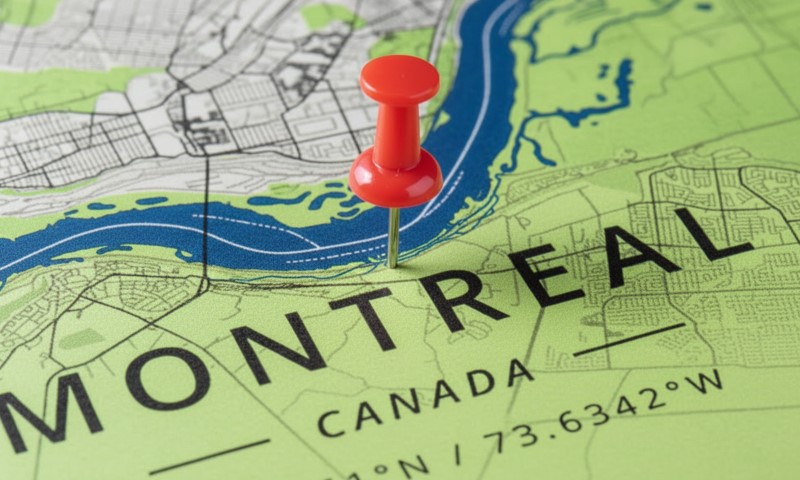
In Montréal, the city says that if you want to work as a tourist guide in Ville-Marie, on public property, you must obtain a permit first. The city’s tourism guide permit page makes that clear.
Québec City is even more explicit. Its official page says that to obtain a tourist guide permit, it is essential to have passed the required guide course offered through approved institutions, and during a tourist visit, the guide must wear the card visibly. That is not a loose recommendation. That is a concrete municipal permit system.
Niagara Parks also maintains its own licensing process. Its application page tells prospective guides to apply for a Niagara Parks Tour Guide Licence and complete the test process if required. That means guides working there are not just relying on general tourism experience. They are stepping into a locally licensed operating environment.
In British Columbia, the rules get even more specialized once the work moves into outfitting and regulated wilderness activities.
The province’s guide outfitter licence system requires proof, such as passing the Guide Outfitter Exam for new applicants and other territory-based documentation. That is not the same thing as a simple city walking tour, but it shows how quickly “tour guide” work can move into licensed territory depending on the activity.
Real Examples Of Places With Guide-Specific Requirements
| Place / System | Type of Rule | What the Official Source Says |
| Parks Canada places | Business licence | Guides or tour operators may require a valid business licence for each national park or historic site |
| Ville-Marie, Montréal | Municipal permit | Tourist guides on public property must obtain a permit |
| Québec City | Municipal permit | Permit required, with approved training and a visible guide card |
| Niagara Parks | Site-specific licence | Application, fee process, and test may apply |
| British Columbia guide outfitting | Provincial licence | Guide outfitter licence with exam and territory requirements |
When You Probably Do Not Need A Special Tour Guide Licence
If you are offering tours in a place that does not have a municipal guide permit system, and you are not operating inside a protected federal site or a provincially regulated guiding activity, you may be able to work without any special tour guide licence.
That is often the case for ordinary private city tours, cultural walks, food tours, or local experience-based guiding. But “no tour guide licence” does not mean “no legal obligations.”
You may still need to register a business, collect and remit tax depending on structure and revenue, carry liability insurance, comply with municipal business rules, and follow transport law if you are driving passengers.
That distinction matters because people often ask the wrong question. They ask only whether they need a “tour guide licence,” when the more useful question is whether they need any authorization to run paid tours legally in that place.
Sometimes the answer is no licence but yes, business registration. Sometimes it is yes permit, yes insurance, and yes local approval. Sometimes it is all of the above.
Tour Guide Versus Travel Agent: Do Not Mix Them Up
A lot of people mix up tour guiding with travel selling, but they are not the same job. A tour guide leads visitors, interprets places, and manages on-the-ground visitor experiences.
A travel agent or travel advisor sells trips, books suppliers, builds itineraries, and handles client travel planning. In some provinces, travel sellers face their own licensing or registration rules that have nothing to do with whether you physically guide a tour.
That is why the business model matters. If you mainly want to plan vacations, book Disney, cruises, or supplier packages rather than personally lead groups on the ground, you are really talking about the travel-advisor side of the industry, not local guide licensing. That is also where a host-agency model can make more sense
Agency, like Yeti Travel, positions itself around training, supplier access, CRM tools, and support for travel advisors, including suppliers like Disney, Universal, cruise lines, and other major travel brands. That is a very different lane from someone seeking a municipal permit to guide a walking tour in Montréal or a site licence for a national park.
What Foreign Or New Guides Should Check First
@camiliarodriguez Would you ever try being a TourGuide? Lemme know #canadiantourism #canadiantourguide #tourismcanada #vancouvertourguide #vancouvertourism #myristorantecreation #latinacreator #latinainvancouver #tourguidelife #tourguide #tourguidestory
If you are new to Canada or trying to start guiding quickly, do not begin with broad internet advice. Start with the exact place where you want to work. Look at the city, the park authority, the province, and the land type.
A guide job can look simple on paper and still trigger location-specific rules. Immigration and work authorization are separate issues as well. Canada’s work permit system makes clear that most foreign nationals need a work permit to work in Canada, and federal immigration materials repeatedly stress checking whether your occupation is regulated in the province or territory where you want to work.
A practical way to think about it is this:
| What do you want to do | What to check first |
| Lead walking tours in a downtown area | City permit rules, business licence rules, public-space rules |
| Guide inside a national park | Parks Canada commercial licence rules |
| Run wildlife, hunting, or outfitter-style trips | Provincial wildlife or outfitter licensing |
| Sell vacation packages online | Provincial travel seller/agency rules |
| Work in Canada as a foreign national | Work permit and occupation-regulation status |
A Few Practical Facts That Matter More Than People Think
Here are a few facts that make the answer less abstract.
First, some of Canada’s most tourist-heavy destinations do use formal guide permits, so anyone saying “you never need a licence in Canada” is overstating it. Montréal, Québec City, Niagara Parks, and Parks Canada places are enough to prove that location-specific compliance is real.
Second, tourism is economically significant enough that local regulators and destination managers take quality, safety, and site control seriously.
Third, many entry points into tourism do not begin with tour guiding at all. They begin with travel advising, itinerary design, supplier sales, or niche trip planning. That is one reason host agencies continue to attract new entrants. The role is structurally different from local guiding, and the compliance questions are different, too.
Bottom Line
No, you do not usually need one general licence to be a tour guide in Canada. But that does not mean you can assume you are free to operate anywhere without approvals. In Canada, the real rule is local: check the city, the site, the park, the province, and the type of tour.
Some places will let you work without a special guide licence. Others will require a permit, training, a site-specific business licence, or a regulated outfitter licence.